
8 Thank You Interview Subject Line Examples
Explore 8 thank you interview subject line examples by tone and role, with personalization tips and guidance on visible Gmail tracking.
A strong thank-you interview subject line is specific, professional, and personalized to the conversation. In a large analysis of more than 130 million B2B emails, personalized subject lines reached a 46% open rate compared with 35% for non-personalized lines, while 2 to 4 word subject lines also reached 46%, compared with 34% for lines of 10 or more words. (Autobound’s subject-line analysis)
You’ve just finished an interview, and your inbox is already filling with follow-ups from recruiters, candidates, clients, and colleagues. A hiring manager scanning that inbox needs to identify who you are, which conversation you mean, and why you’re writing before opening the message.
The best subject line adds one useful detail, such as the interviewer’s name, the exact role, or a memorable discussion point, without becoming unwieldy. The eight examples below match different interview contexts, tones, and roles. They also explain when Mail Tracker for Gmail, a product name, is appropriate as an optional way to receive open notifications from Gmail, and when visible tracking may feel out of place. Tracking isn’t automatically beneficial. Recipient expectations, workplace norms, and the nature of the relationship should guide the choice.
Timing matters, too. Send the note within 24 hours, with 48 hours as a practical outer bound, according to the interview follow-up guidance summarized by Nvecta’s subject-line recommendations. For broader advice on matching appreciation with the right warmth and timing, review this guide to tone and timing for thank-you notes.
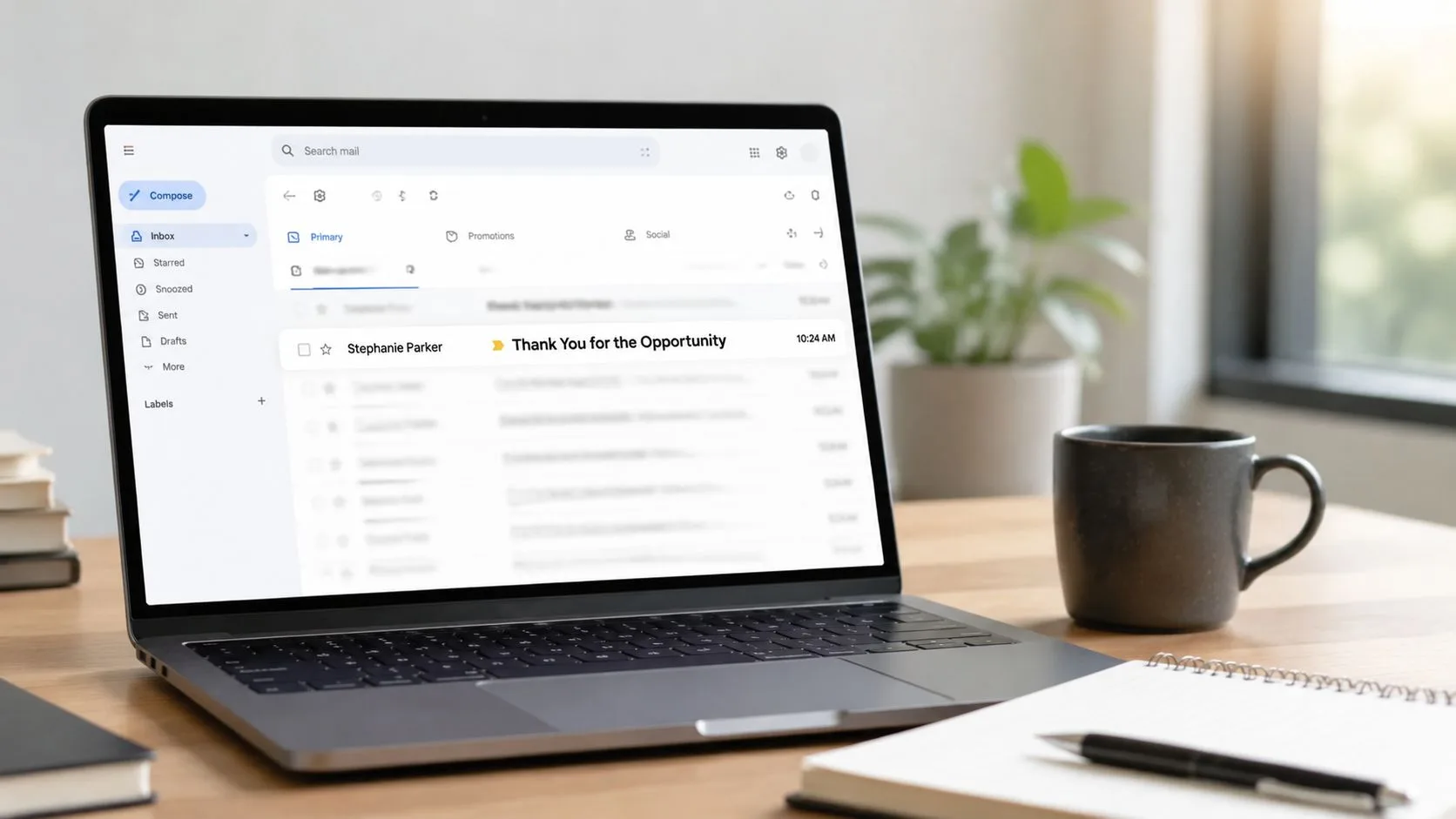
1. Thank You for the Opportunity
Thank You for the Opportunity remains one of the safest choices after a formal interview. It tells the hiring manager exactly why you’re writing, expresses appreciation without overstatement, and works for a marketing candidate after a group interview, a sales professional following a one-on-one meeting, or an entry-level candidate after a campus recruiting session.
Its main strength is recognition. The recipient doesn’t need to decode a clever phrase or remember which conversation you mean. Its limitation is that it doesn’t identify you or the role, so add those details in the body and make sure your sender name is clear.
Make the body carry the personalization
Send the message within 24 hours, while the discussion is still fresh. The subject line can stay classic, but the first paragraph should mention one concrete topic, such as a campaign challenge, sales territory, team goal, or question the interviewer raised.
For a marketing candidate, the body might refer to the startup’s plans for improving product adoption. A sales candidate could connect their experience to the hiring manager’s comments about pipeline development. An entry-level candidate might mention a conversation about training, mentorship, or the transition from campus recruiting into the role.
Practical rule: Use a conventional subject line when clarity matters more than personality. Put the memorable detail in the email body.
Mail Tracker for Gmail can provide an open notification when the hiring manager views the message. That visibility may help a recruiter decide when to follow up, but it isn’t always appropriate to monitor a personal thank-you note. The product’s Premium option includes invisible tracking, while the free plan uses a visible tracking signature. Choose deliberately, and consider whether the recipient would reasonably expect tracking in a hiring exchange. For more guidance on writing concise, purposeful subject lines, see these effective subject lines for sales emails, then adapt the principles to recruiting.
2. Appreciated Speaking with You Today
Appreciated Speaking with You Today has a warmer, more conversational feel than the classic option. It fits a customer success candidate who spoke with a hiring manager and team lead, a consultant who completed a collaborative problem-solving interview, or a designer who had a detailed creative discussion with a department head.
This line works best when the interview felt like a genuine exchange rather than a rigid question-and-answer session. It communicates that you remember the interaction as a conversation, not just as an evaluation. That distinction can make the follow-up feel less transactional.
Add the person who made the conversation memorable
If the relationship felt comfortable, personalize the line with the interviewer’s name:
Appreciated Speaking with You Today, Priya
Use the exact name the interviewer used in conversation, and proofread it before sending. A name adds relevance, but it also increases the cost of an error. If you’re unsure about spelling or the relationship was highly formal, leave the name out and personalize the body instead.
Send this note promptly, ideally within the same day. A customer success candidate could mention a discussion about onboarding friction. A consultant might refer to the way the team evaluated competing solutions. A designer could connect the conversation to a product or brand challenge discussed during the interview.
Mail Tracker for Gmail can show whether the message was opened, and Premium Daily Email Reports can summarize tracked activity. That information may be useful for a recruiter managing several conversations, but repeated opens don’t prove that multiple decision-makers read the message. The email might be reviewed, forwarded, or reopened by one person. Treat tracking activity as a timing signal, not as a conclusion about the hiring decision.
3. Following Up on [Specific Position Title] Interview
Following Up on Senior Marketing Manager Interview is the practical choice when the recipient handles multiple candidates, multiple vacancies, or several rounds for the same organization. It removes ambiguity immediately and demonstrates that you know the exact role under discussion.
Use the official title from the job posting or the interviewer’s introduction. If the role is Product Manager (iOS), don’t shorten it to “Product Manager” when the distinction matters. A business development candidate following second-round interviews could write Following Up on Business Development Representative Interview.
Exact wording beats unnecessary detail
You can add context when it helps:
Following Up on Senior Marketing Manager Interview, Marketing Department
The trade-off is length. Extra context can help a large company route the message, but a long line may be truncated in a mobile inbox. A second analysis of more than 260 million emails found that including the recipient’s name in the subject line increased open rates by 2.6%, while 6 to 10 word subject lines had the highest open rate at 21%. (Autobound’s email benchmark discussion) Use that evidence as a directional reminder to personalize without stuffing the subject line.
Send the email within 24 hours and connect the role to one discussion point in the body. A senior marketing candidate might mention the company’s positioning challenge. A product candidate could refer to the mobile experience. A business development candidate might address the second-round conversation about territory growth.
Mail Tracker for Gmail’s per-message timestamps can show when a tracked message was opened. That can help a recruiter organize follow-up activity, but it shouldn’t be used to pressure a hiring manager immediately after an open. For recruiting teams building repeatable communication, these recruitment email templates can help standardize structure without removing personal detail.
4. Thank You, [Interviewer Name] and Team
Thank You, Sarah and Engineering Team acknowledges the group rather than treating a panel interview as a single conversation. It’s a natural fit after a technical panel, a group interview, or a meeting involving a director, manager, and HR representative.
The subject line signals that you noticed who participated. That matters because each interviewer may remember a different part of the discussion. A candidate who met Director Martinez, Manager Chen, and the HR Team can use those titles when individual names aren’t available. If nobody’s name is known, Thank You, Hiring Committee is clearer than guessing.
Personalize individually when possible
The strongest approach is usually to send each interviewer a separate note with a distinct reference. Write to the engineering lead about the technical challenge, the product partner about collaboration, and the recruiter about the hiring process. Then, if useful, send a concise group message through the primary contact.
Keep the group subject line compact:
- Thank You, Jane and Product Team
- Thank You, Sarah and Engineering Team
- Thank You, Hiring Committee
Verify names and titles from business cards, calendar invitations, or the recruiter’s introduction. A misspelled name undermines the personalization you intended to create.
Mail Tracker for Gmail can show whether a group message was opened and whether a tracked message generated later activity. Don’t interpret forwarding as proof that every panel member reviewed it, and don’t use tracking to replace individualized appreciation. In a panel setting, relationship quality matters more than collecting activity signals. If you use visible tracking, make sure the signature won’t distract from a short, professional thank-you.
5. Excited About [Company Name] and Our Conversation
Excited About Northstar and Our Conversation communicates enthusiasm for both the organization and the interview itself. It suits a candidate who found genuine mission alignment, a professional who discussed a recent product launch, or a job seeker drawn to the company’s industry impact and values.
The company name gives the recipient an immediate anchor. The phrase “our conversation” makes the line more personal than a generic statement of interest in the job. Still, enthusiasm needs evidence. Without a specific reference in the body, the subject can sound like standard candidate language.
Earn the enthusiasm
Research the company’s recent product work, public priorities, or cultural initiatives before drafting. Don’t mention a detail just because it appears on the company website. Use something the interviewer discussed or something that shaped your interest.
A startup candidate might write about the organization’s mission and connect it to a project they’ve worked on. A product candidate could reference a launch the interviewer described. A business candidate might mention the company’s approach to entering a new market.
Avoid inflated language such as “This is my dream company” unless the relationship and conversation support that tone. Authentic enthusiasm is specific, calm, and connected to contribution.
Mail Tracker for Gmail can show when a tracked message is opened, which may help a recruiter time a later response. A quick open doesn’t necessarily indicate mutual excitement, however. It may reflect an efficient inbox routine, so don’t build a narrative around timing alone. Tracking is most defensible when you already use it consistently in professional Gmail workflows and the recipient’s communication norms support it.
6. Quick Thank You from [Your Name]
Quick Thank You from Sarah Mitchell is concise, identifiable, and slightly more casual. The word “Quick” sets an expectation that the email won’t demand much time, while the full name tells the hiring manager exactly who sent it.
This subject works well after an informal interview, a startup conversation, or a creative discussion where the tone was relaxed. It’s less suitable for a highly formal executive interview or a process that has emphasized strict corporate convention.
Keep the promise
If you call the note “Quick,” the body should deliver on that promise. Use three or four short paragraphs, thank the interviewer, mention one relevant detail, reaffirm your interest, and close with an offer to provide more information. Don’t use the subject as permission to send a long recap.
A sales candidate could reference the team’s approach to customer acquisition. A startup candidate might mention the speed of experimentation discussed. A media marketing candidate could connect the conversation to a creative campaign or audience challenge.
The sender name matters more here than in a role-specific subject line. Use your full name, not only a first name, especially if the hiring manager is reviewing several candidates. A recognizable sender reduces the work required to understand the message.
Mail Tracker for Gmail may help you see whether the short note was opened, but tracking can change the tone of an otherwise friendly exchange. If you’re uncertain, send the thank-you without tracking. The message’s brevity and relevance should create the value, not the expectation that you’ll monitor the recipient’s behavior.
7. Our Discussion Today, Thank You
Our Discussion Today, Thank You frames the interview as a two-way exchange. It can suit an executive candidate speaking with company leadership, a technical specialist discussing solutions with engineering leaders, or a consultant working through strategic planning questions with decision-makers.
The wording subtly positions you as an active participant. That can be effective when the interviewer asked for your perspective, explored trade-offs with you, or shared a meaningful business challenge. It can sound presumptuous after a tightly structured screening call, so use it only when the conversation felt collaborative.
Support the framing in the body
Mention the actual subjects discussed. An executive candidate might refer to the company’s growth priorities. A technical specialist could connect the conversation to system reliability or implementation decisions. A consultant might summarize the strategic planning issue and explain why it aligns with their experience.
“Our discussion” works when you can point to an exchange, not merely a list of questions you answered.
The body should demonstrate active listening rather than claim equality through wording alone. Briefly acknowledge the interviewer’s perspective, add a relevant thought, and explain how your experience could contribute. That combination makes the subject line feel earned.
Send it within 24 hours so the discussion remains recognizable. Mail Tracker for Gmail can provide open notifications and timestamps, but don’t treat them as a substitute for a thoughtful follow-up. If the hiring team doesn’t respond, use a measured follow-up email after no response rather than sending repeated tracking-driven nudges.
8. Thank You, [Key Insight or Takeaway from Interview]
Thank You, Re: Your Customer Retention Challenge is the most effective option in the list. It references a meaningful point from the interview and signals that you listened, retained the terminology, and considered how your experience could address the organization’s needs.
Use this pattern when the conversation produced a substantive takeaway:
- Thank You, Regarding API Integration Discussion
- Thank You, About the Market Expansion Strategy
- Thank You, On the Team Scaling Question
A consulting candidate can refer to a customer retention challenge. A technical candidate might use the API integration discussion. A business development candidate could mention market expansion. An HR candidate may reference the team scaling question.
Choose a detail that earns its place
Take notes immediately after the interview and preserve the interviewer’s wording where appropriate. Pick an insight specific enough to demonstrate attention but broad enough to discuss professionally. Don’t turn the subject line into a miniature proposal or reveal confidential information.
The body can add one useful perspective, acknowledge the company’s current approach, and connect your experience to the challenge. Keep the contribution measured. A thank-you email isn’t the place to solve the organization’s entire problem or imply that you understand more than the team does.
Best use: Choose an insight-led subject only when you have a relevant thought or experience to support it. Specificity without substance feels performative.
Send it within 24 hours, before the details fade for either person. Mail Tracker for Gmail can show open events, timestamps, and counts from Gmail, but forward activity is ambiguous. The interviewer may share the message with a colleague, or may reopen it. Use those signals for practical timing, not as evidence of enthusiasm or an impending offer.
This video offers another visual reference for shaping a professional post-interview message.
8 Thank-You Interview Subject Line Comparison
| Subject Line | 🔄 Implementation Complexity | ⚡ Resource / Effort | 📊 Expected Outcomes | 💡 Ideal Use Cases | ⭐ Key Advantages |
|---|---|---|---|---|---|
| Thank You for the Opportunity | 🔄 Low, simple, formal phrasing | ⚡ Low, minimal prep; send within 24h | 📊 Consistent open rates; clear purpose | 💡 Universal, all industries & interview types | ⭐ Recognizable, safe, professional |
| Appreciated Speaking with You Today | 🔄 Medium, warm, conversational tone | ⚡ Medium, personalize (name), quick follow-up | 📊 More memorable; builds rapport | 💡 Collaborative/team‑oriented roles | ⭐ Shows emotional intelligence; relationship‑building |
| Following Up on [Specific Position Title] Interview | 🔄 Medium, include exact role/title | ⚡ Medium, verify title; avoid truncation on mobile | 📊 Clear context; reduces miscategorization | 💡 Multiple roles / large organizations; tracking apps | ⭐ Demonstrates organization and attention to detail |
| Thank You – [Interviewer Name] & Team | 🔄 Medium‑High, accurate name collection | ⚡ Medium, gather names; consider individual follow‑ups | 📊 Personal and shareable among panel members | 💡 Panel interviews or multi‑interviewer rounds | ⭐ Personalizes message; shows respect for team |
| Excited About [Company Name] & Our Conversation | 🔄 Medium, balance enthusiasm and professionalism | ⚡ High, company research; substantiate claims | 📊 Stands out; signals cultural fit (risk if unbacked) | 💡 Competitive or mission‑driven companies, startups | ⭐ Differentiates candidate; shows genuine motivation |
| Quick Thank You from [Your Name] | 🔄 Low, concise and informal | ⚡ Low, name plus very brief body | 📊 Fast opens; signals efficiency and respect for time | 💡 Fast‑paced startups; busy hiring managers | ⭐ High scannability; approachable modern tone |
| Our Discussion Today – Thank You | 🔄 Medium, frame as mutual conversation | ⚡ Medium, reference discussion points to validate | 📊 Positions candidate as peer; strong for senior roles | 💡 Executive, specialist, or consultative interviews | ⭐ Conveys confidence and collaborative stance |
| Thank You – [Key Insight or Takeaway from Interview] | 🔄 High, pick appropriate insight carefully | ⚡ High, immediate notes, thoughtful drafting required | 📊 Highly memorable; may prompt immediate engagement | 💡 Analytical, strategic, technical, or specialist roles | ⭐ Demonstrates deep engagement and problem‑solving |
Choose Specificity Over Cleverness
The right thank-you interview subject line depends on the context, not on how creative it sounds. Use Thank You for the Opportunity when formality and immediate clarity matter. Choose the exact role when the hiring manager may be handling several openings or when you’ve interviewed for more than one position. Acknowledge the panel when several people participated, and personalize separate messages whenever you can.
Use a company-focused line when your enthusiasm is genuine and tied to a specific detail. Choose Quick Thank You from [Your Name] after a relaxed conversation, but keep the email as brief as the subject promises. Use Our Discussion Today, Thank You only when the interview involved real dialogue. An insight-led line is strongest when the conversation produced a meaningful takeaway that you can support in the body.
Subject-line performance research supports this preference for relevance over generic wording. One widely cited industry benchmark reports that 47% of email recipients open an email based on the subject line, while 69% report email as spam based solely on the subject line. (Invesp’s email subject-line statistics) The practical lesson is simple. Make the message recognizable without making it sound like an automated campaign.
The body must support the subject line’s promise. If the line names a challenge, discuss that challenge. If it names the role, explain why the role interests you. If it says “Quick,” don’t send a dense essay. A strong subject can earn attention, but only a relevant, well-proofread message can make that attention useful.
Tracking requires the same judgment as personalization. Mail Tracker for Gmail can provide read receipts, real-time open notifications, open counts, and per-message timestamps inside Gmail. It supports Gmail workflows on web and mobile, and its tracking approach records open events rather than reading email content. Those features can help you decide when a polite follow-up is timely, but an open doesn’t reveal intent, approval, or who else saw the message.
Use this final checklist before sending:
- Personalize one detail: Add the interviewer’s name, exact role, company, or a relevant discussion point.
- Send promptly: Aim for the same day or within 24 hours. If you’re late, send a sincere note rather than skipping it.
- Proofread names and titles: Confirm every person, company, and position title.
- Keep the body focused: Thank the interviewer, reinforce interest, reference the conversation, and close professionally.
- Choose tracking deliberately: Use visible tracking when transparency fits the relationship, and avoid tracking when recipient expectations or workplace norms make privacy more important.
A concise, specific line is usually more useful than a charming but vague one. For additional guidance on how to craft a compelling subject, focus on making the recipient’s recognition effortless.
Mail Tracker for Gmail adds read receipts, open counts, timestamps, and real-time notifications directly to Gmail, helping you time post-interview follow-ups without adding a separate workflow. Visit Mail Tracker for Gmail to choose the tracking approach that fits your communication norms, including visible tracking or Premium options for more detailed activity.
Ready to track your emails?
Add Mail Track for Gmail from the Google Workspace Marketplace and know the moment your emails are opened. Free and unlimited.
Add to GmailMore reading
More from Guides
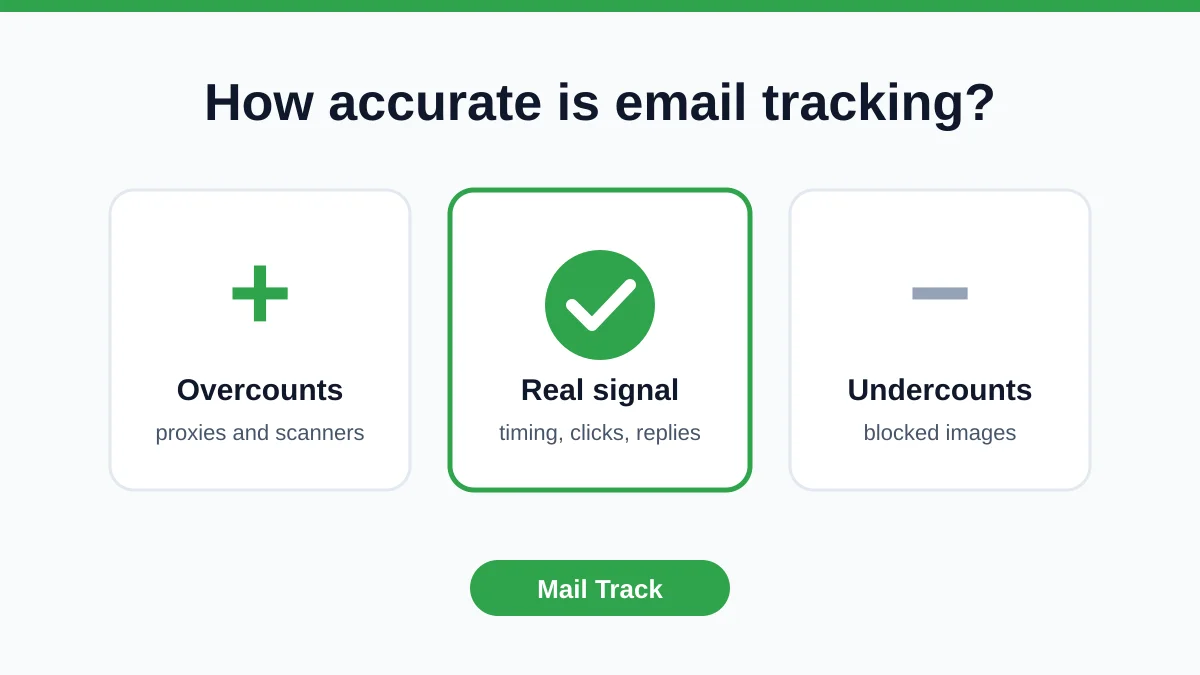
How Accurate Is Email Tracking? What Opens Really Tell You
How accurate is email tracking in Gmail? Learn why opens get overcounted or missed, how to spot false opens, and which signals to trust before you follow up.
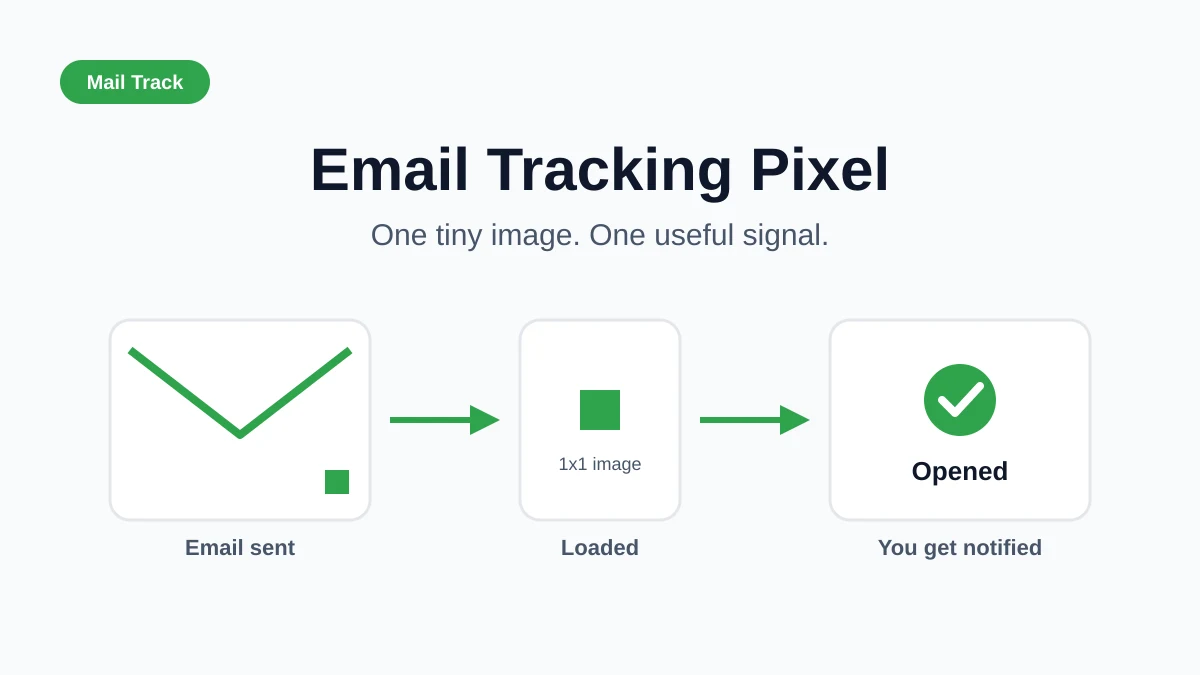
Email Tracking Pixel: How It Works, How to Spot One and Where It Falls Short
What is an email tracking pixel, how does it show an open in Gmail, how can you find one, and why Gmail and Apple Mail proxies limit what it can tell you.
7 Example Email Accept Job Offer Templates
Use these 7 example email accept job offer templates for formal, concise, and enthusiastic replies, with subject lines, clauses, and sending tips.