
Top Business Development Tools for 2026
Explore the best business development tools, CRMs, prospecting, and outreach platforms to accelerate your sales pipeline.

Stop guessing, start growing. If your team is juggling follow-ups, list building, meeting scheduling, and CRM updates by hand, you already know how fast business development gets messy. The right business development tools don’t just save time, they keep momentum alive when a prospect opens an email, a lead changes jobs, or a meeting needs to be booked before interest cools off.
The best stacks are rarely the biggest stacks. They’re the ones that fit the motion of the team, whether that means living inside Gmail, working from LinkedIn, or running a full sales engine across a CRM and engagement platform. Low-code and no-code tools are also pushing more of this work into the hands of operators, with the global low-code market estimated at about $10 billion in 2019 and projected to reach $187 billion by 2030 at a 31% CAGR (Index.dev). That matters because the internal apps and workflows behind prospecting, reporting, and automation no longer need a big engineering queue.
Below are 10 tools I’d consider when building a practical biz dev stack, organized by the job each one does best.
1. Mail Tracker for Gmail
For teams that work out of Gmail all day, this is the simplest place to start. Mail Tracker for Gmail runs inside Gmail on web and mobile, so reps get read receipts, double check marks, open counts, per-message timestamps, and instant push notifications without switching tools. That matters in real sales work, because if the inbox is where follow-up happens, the tracking has to live there too.
Mail Tracker for Gmail fits reps, recruiters, freelancers, and small business owners who need quick engagement signals without adding a heavier system to the stack. It’s available through the Google Workspace Marketplace and as a Chrome extension. The product notes a 4.6/5 rating from 2,677+ reviews. The free plan includes unlimited tracking, while Premium is about $2.99/month billed yearly and the Lifetime option is $99.99.
Why it works in real work
The value is not just the tracking. It is the timing. If a prospect opens a message minutes after you send it, you can respond while the thread is still active instead of waiting until the next day and hoping the lead still cares.
For outbound reps, that kind of signal changes how you prioritize the day. Open data is not perfect, and it should not drive every decision, but it does help you separate a warm thread from a dead one. If you pair it with a clean follow-up process, the tool pays off fast.
Practical rule: use tracking to improve follow-up timing, not to create more noise. One well-timed reply beats three rushed check-ins.
Pros
- Gmail experience. Read receipts, double check marks, open counts, and timestamps appear in inbox context.
- Unlimited free tracking. The free tier is generous enough for real daily use.
- Real-time alerts. Desktop and mobile notifications help you act at the right moment.
- Affordable upgrade path. Premium stays light, and the Lifetime license suits long-term users.
- Privacy-aware design. It records open events, not email content, and documents GDPR rights for access, correction, and removal.
Cons
- Open tracking can undercount. If recipients block images, opens will not always register.
- Visible branding on free. Some recipients may notice the free-plan signature, and invisible tracking is a Premium feature.
2. HubSpot Sales Hub
A rep opens the inbox, checks the pipeline, logs a call, and sends a sequence without switching tools. That is the kind of day HubSpot Sales Hub is built for. If your team needs one place for CRM, outreach, reporting, and basic revenue management, it is one of the most practical all-in-one choices. It brings deal pipelines, tasks, forecasting, templates, sequences, call logging, meeting links, and reporting into a single system, which cuts down on tool sprawl fast.
The strongest fit is a team that wants to stop stitching together separate products. HubSpot’s native Gmail add-ons and Chrome extension keep reps inside their inbox while still logging activity to the CRM, and that matters when you want adoption without a lot of process drag. Its app ecosystem is broad too, so operations can keep adding pieces as the sales motion gets more complex.
The trade-off shows up as the team grows. HubSpot feels manageable early, then pricing can climb as seats and features stack up. If you need advanced conversation intelligence or deeper AI-assisted functionality, those capabilities sit higher up the plan ladder. For teams that care about process control, that may still be worth it. For smaller teams, it can be more platform than they need.
Learn more about outreach strategy here: sales outreach strategy.
Best for teams that want one operating system
HubSpot works best when leadership wants visibility and reps need a low-friction process. It is not the cheapest route, but it reduces the number of systems people have to remember every day, and that often matters more than feature count.
The biggest win with all-in-one software is usually adoption, not feature count.
Pros
- Strong Gmail integration. Reps can work from the inbox without breaking rhythm.
- Scales well. It can serve a startup and still hold up as the team grows.
- Mature reporting. The analytics are deeper than most lightweight sequencers.
Cons
- Seat-based cost grows fast. Add-ons can push total spend higher than expected.
- Advanced features sit higher up. Some teams will not need the full stack, but they will pay to get there.
Website: HubSpot Sales Hub
3. Apollo.io
Apollo.io works well when a team needs both list building and outbound execution in the same workflow. Apollo.io brings B2B contact data, enrichment, and multichannel sequences into one place, which helps SMB and mid-market teams avoid stitching together a separate data vendor and an engagement platform.
The practical benefit is speed. Reps can prospect, enrich records, send email steps, trigger dialer actions, and log LinkedIn touches without bouncing between tools for every contact detail. The Chrome extension also makes in-Gmail sourcing easier, so research stays tied to the work reps are already doing.
The trade-off is usage discipline. Apollo’s credit system and API metering can surprise first-time buyers if no one owns usage and watches consumption as the team scales. The platform works best when someone is responsible for keeping an eye on how fast credits get burned and how the team is using the data.
Best for teams that need one workflow from source to sequence
Apollo fits a clear outbound motion where the team wants to find contacts, enrich them, and move straight into outreach without much process overhead. It gives smaller teams enough structure to stay consistent, while still being lighter than an enterprise suite that can slow reps down.
That makes it a practical choice for teams that care more about execution than platform sprawl. The upside is less context switching and fewer tools to manage. The downside is that buyers need to understand the usage model before they commit, because credit logic and API limits affect how far the stack can scale.
For a team that wants a direct, repeatable system, Apollo is easy to justify. For a team that needs tighter control over consumption or wants a very simple buying model, it can take more oversight than the headline features suggest.
Pros
- All-in-one workflow. Data and outreach live together, which keeps reps moving.
- Good fit for smaller teams. Consolidation matters when headcount is tight.
- Useful documentation. Credit and API details are visible enough for buyers to plan around.
Cons
- Usage-based costs need attention. The team has to track credits before they become a surprise.
- Credit logic takes training. Reps and managers need to understand how the system is metered.
Website: Apollo.io
4. LinkedIn Sales Navigator
A rep usually reaches for LinkedIn Sales Navigator when the list matters as much as the message. It works well for account research, trigger-based outreach, and building a clean set of contacts before anyone starts a sequence. For teams that need to spot role changes, recent activity, or signals that make a conversation timely, it gives a practical starting point.
Its real advantage is the LinkedIn graph itself. Reps can see people in context, map relationships, and find warmer paths into an account than most databases can surface. The CRM and Gmail integrations help keep the workflow connected, but the main value sits in discovery quality and the alerts that point to better timing. For machine shops and similar industrial teams, Sales Navigator strategies for machine shops can show how that timing looks in a more targeted motion.
The trade-off is straightforward. Sales Navigator is strong for finding and watching people, but it does not replace a sequencing tool or inbox workflow. Teams that use it well usually pair it with an email tracker or a separate engagement platform, then keep Sales Navigator focused on research and signal tracking.
Use it to spot timing, not just target accounts
Good prospecting is about fit and timing together. A contact who just changed roles, posted a relevant update, or moved into a company you already track is easier to approach with a useful reason to reach out. Sales Navigator surfaces that context quickly, which saves reps from guessing and helps them prioritize the accounts worth touching first.
The practical test is simple. If your team already has a response workflow, Sales Navigator adds a lot of value. If it does not, the alerts will create more opportunity than your reps can realistically work through.
Pair discovery tools with a follow-up system. Strong signals without a response workflow waste reps’ attention.
If your stack already depends on LinkedIn Sales Navigator, the question is not whether it can find prospects. The question is whether your team will act on the timing it shows.
Pros
- Best-in-class B2B discovery. Search and filtering go deeper than many data tools.
- Useful alerts. Job changes and news help reps time outreach better.
- Supports warm intros. TeamLink and network-based paths fit social selling motions.
Cons
- Per-seat cost is high. ROI depends on whether reps consistently use it.
- Limited inbox execution. It is not a full engagement suite.
Website: LinkedIn Sales Navigator
Backlink: Sales Navigator strategies for machine shops
5. ZoomInfo SalesOS
A team reaches for ZoomInfo SalesOS when basic contact data is not enough. It is built for B2B motions that need firmographics, verified contacts, org charts, buying committee visibility, intent data, and CRM enrichment in one place, so reps and ops are not stitching together separate tools to understand an account.
That matters most in larger sales motions where account depth drives the work. ZoomInfo is especially useful for teams that need dependable routing, cleaner enrichment, and better account planning. It also connects into broader GTM workflows more naturally than smaller point tools, which makes it easier to keep data flowing into the systems a team already uses.
The trade-off is simple. Pricing is premium and usually negotiated, so it is not a fit for every team. Data quality still needs hands-on validation, since segment-level accuracy can vary, and no premium database should be trusted without testing it against your own target accounts.
For smaller teams, the key question is whether the extra coverage will change daily execution. If the team does not yet have clear processes for enrichment, routing, and account planning, a large data platform can create more capability than reps can use well.
Pros
- Deep database coverage. Reps and managers get more material for account research and list building.
- Strong integrations. It fits into broader GTM operations and existing workflows.
- Buying committee visibility. Org charts and contact data help map accounts and find the right people faster.
Cons
- Premium pricing. It is built for larger budgets and a stronger data spend.
- Accuracy varies by segment. Teams still need to verify target accounts before relying on the data.
Website: ZoomInfo SalesOS
6. Salesloft
A messy outbound motion gets expensive fast. Salesloft is the kind of platform teams bring in when they need to tighten that motion, keep reps in a consistent cadence, and see what is happening across email, calls, and LinkedIn without relying on scattered habits.
Its real value shows up in managed teams. Sales leaders can set standards, watch activity, and coach from the same system, while operations can control how the platform is used across roles and segments. That makes it a stronger fit for larger SDR orgs and closing teams than for a founder running outreach alone or a small pod that just needs basic tracking.
The trade-off is the amount of work required to make it pay off. Setup, permissions, and process design take real attention, and the quote-based pricing model is harder to compare than simpler SMB tools. If your team only needs Gmail-first tracking and light sequencing, Salesloft is likely more platform than you need.
If your process already falls apart when reps improvise, the fix is control before more features.
Built for repeatable team execution
Enterprise teams buy Salesloft because they want the same playbook used the same way across the org. That matters when managers need coaching visibility, reps need clear next steps, and ops needs to keep the process from drifting.
The upside is consistency. The downside is that teams have to commit to that consistency, which means rules, governance, and training are part of the purchase, not an optional add-on. For a sales org that wants flexibility above all else, that can feel restrictive. For a team with multiple managers and several motions running at once, it can prevent a lot of operational noise.
Pros
- Designed for scale. Team controls and permissioning support larger sales orgs.
- Strong analytics. Leaders get visibility into engagement and rep activity.
- Enterprise support model. It is built for complex environments and coordinated rollout.
Cons
- Higher cost. It usually sits above SMB-first tools on price.
- More setup effort. Smaller teams may not use enough of the system to justify the lift.
Website: Salesloft
7. Outreach
Outreach fits teams that need a sales engagement system, not just a sequencer. It brings email, call, and social cadences into one place, along with rules, A/B testing, governance, deal coaching insights, and conversation analytics. That combination matters most in larger organizations where process drift becomes a real problem.
The main strength is control. Managers can see rep activity, deal health, and coaching moments in a structured way, which makes it easier to keep outbound motion aligned across teams. Voice add-ons and AI features can extend the platform further, but they also add cost and operational overhead. If a team plans to use those extras, the rollout needs to account for training, permissions, and adoption from the start.
For a small team, that level of system can be too much. Outreach asks for more implementation work than a Gmail-native tracker or a light sequencer, and the pricing gets harder to justify if the team only needs basic outbound workflows. For a larger sales org with RevOps discipline, the governance can save more time than it consumes.
Best for organizations that need control
Outreach works well when multiple managers need the same process enforced across segments, territories, or pods. It gives leadership a clear view of activity and makes it easier to coach against the same standards.
If your team values flexibility above process, the fit gets weaker fast. Outreach is strongest when consistency matters more than rep-by-rep improvisation, and that trade-off is worth accepting only if the org will use the controls.
Pros
- Mature platform. It handles complex sales motions without falling apart under scale.
- Strong coaching insights. Managers get useful visibility into rep behavior and follow-through.
- Useful analytics. RevOps teams can work with the data to keep process tight.
Cons
- Custom pricing. It is harder to compare than simpler tools.
- Heavier implementation. Smaller teams may move more slowly and use less of the system than they expect.
Website: Outreach
8. Calendly
A lot of deals stall at the calendar stage, not at interest. Calendly clears that bottleneck by letting prospects book time without back-and-forth, which makes it one of the most practical tools in a biz dev stack.
It fits especially well in teams that need routing discipline. Round-robin assignment, team scheduling, and fields from Salesforce or HubSpot can send meetings to the right rep automatically. It also plugs into Google and Outlook calendars, Zoom, Google Meet, Salesforce, and HubSpot, so it usually slots into an existing workflow without much disruption.
That speed is the main payoff. Prospects do not want three emails just to find a slot, and reps do not want to spend half a day coordinating calendars. The trade-off is tiering. Advanced routing, SSO, and SCIM sit higher up, so larger organizations should confirm the admin controls they need before rollout. For a team that only needs simple booking, the extra features can be more than they need.
Best for reducing friction after interest is earned
Calendly does not create demand. It moves interested prospects into meetings faster, which is often the point where deals start to move.
For teams already using email productivity tools, it pairs well with the rest of the stack because it removes one of the last manual steps in the sales process.
Pros
- Very fast time to value. Reps and prospects can use it quickly with little training.
- Simple for prospects. Booking a meeting is straightforward.
- Strong integrations. It fits neatly into common sales workflows.
Cons
- Advanced controls cost more. Some routing and identity features sit on higher tiers.
- Large teams may pay more. Add-ons can push the total up fast.
Website: Calendly
9. Mixmax
For teams that work out of Gmail all day, Mixmax fits naturally into the workflow. It brings email tracking, sequences, templates, meeting scheduling, and AI Copilots for inbox, meetings, and engagement into the same place reps already use for outbound work, so there is less context switching and less training overhead.
That matters in practice. If reps can write, track, and launch from the inbox without jumping between tools, they are more likely to use the system the same way every time. Mixmax also connects with Salesforce and HubSpot, and it carries SOC 2 and GDPR compliance positioning, which will matter to teams that care about how data is handled and how the stack is governed. For teams comparing broader email productivity tools, that Gmail-native setup is part of the appeal.
The trade-off is packaging. Some capabilities are bundled separately, and dialer functions and certain enterprise controls can sit behind add-ons or higher tiers. Unlimited sequencing and advanced rules are tied to the Suite tier, so the platform can fit a Gmail-first motion well without always being the simplest choice for budget-conscious teams.
Best for teams that run outbound from the inbox
Mixmax makes the most sense when Gmail is the control room and reps need speed more than process overhead. It is a practical fit for teams that want tracking, sequencing, and scheduling in one place, without forcing a new way of working on the whole sales team.
If your sales motion depends on heavy enterprise governance outside the inbox, the fit gets weaker. The product is strongest when the main problem is getting reps to execute consistently inside Gmail, not when you need a broader layer to manage every part of the revenue process.
Good Gmail-native tools do not force behavior change. They make the current habit smarter.
Pros
- Strong Gmail UX. Reps can pick it up quickly.
- Flexible packaging. Copilots and Suite options give teams room to choose what they need.
- Solid CRM sync. Salesforce and HubSpot support helps keep handoff cleaner.
Cons
- Some features are add-ons. The actual cost depends on the bundle.
- Advanced sequencing sits higher up. Teams should check the plan carefully before rollout.
Website: Mixmax
Internal guide: email productivity tools with Mixmax
10. Hunter
A clean list is only useful if the emails are real and the sending setup stays healthy. Hunter handles both sides of that problem with a simple workflow, find addresses by domain, verify them in bulk, and keep outreach light when you do not need a full sales engagement platform.
For freelancers, small teams, and SMBs, that trade-off makes sense. The free tier lowers the barrier to entry, and the pricing is easy to understand. The Data Platform and API matter if you want verification built into your own process instead of handled in a separate tool. In practice, that saves time and reduces the risk of mailing stale or wrong addresses, which is one of the quickest ways to hurt deliverability.
The limit is just as clear. Hunter’s outreach features stay intentionally basic, so it fits simple campaigns better than complex sequencing, coaching, or governance. If your team needs a heavier revenue motion with more control, you will outgrow it.
Best for clean list building before a campaign
Use Hunter before you send volume. Verify the list first, then start the campaign with fewer bad addresses in play.
That sequence is especially useful for teams that build prospect lists from domains and want a quick quality check before handing work to a sender or CRM. I would rather catch bad data at the list stage than spend time repairing inbox placement after bounces start to pile up.
Pros
- Transparent entry point. The free tier is useful and easy to understand.
- Useful for validation. It helps protect deliverability by checking addresses before send.
- Good for smaller teams. The workflow stays simple and quick to adopt.
Cons
- Smaller data scope. It is not built like a premium intelligence platform.
- Light engagement features. Outreach is basic compared with enterprise suites.
Website: Hunter
Top 10 Business Development Tools: Feature Comparison
| Product | Core features & USPs ✨ | UX / Quality ★ | Pricing / Value 💰 | Target audience 👥 |
|---|---|---|---|---|
| Mail Tracker for Gmail 🏆 | ✨ In‑Gmail read receipts, double check marks, open counts, per‑message timestamps, real‑time push alerts, mobile support; GDPR‑friendly | ★★★★☆ 4.6/5 (2,677+ reviews) | 💰 Free (visible signature); Premium ≈ $2.99/mo (yr); Lifetime $99.99 | 👥 Sales reps, recruiters, freelancers, SMB owners |
| HubSpot Sales Hub | ✨ CRM + sequences, templates, deal pipelines, Gmail add‑on, deep reporting & integrations | ★★★★☆ Mature, enterprise-ready | 💰 Free CRM tier; seat-based paid tiers & add‑ons (scales cost) | 👥 Sales teams, RevOps, scaling companies |
| Apollo.io | ✨ 250M+ contact database, enrichment, multichannel sequences, Chrome/Gmail extension | ★★★★ Good value for SMBs | 💰 Credit-based / tiered plans; negotiable at scale | 👥 SMB & mid‑market prospecting teams |
| LinkedIn Sales Navigator | ✨ Advanced people/company search, job/news alerts, InMail, CRM integrations | ★★★★ Best‑in‑class B2B discovery | 💰 Per‑seat subscription (mid‑high) | 👥 Account execs, recruiters, social sellers |
| ZoomInfo SalesOS | ✨ Verified contacts, org charts, intent data, deep firmographics, CRM enrichment | ★★★★ Enterprise‑grade data | 💰 Enterprise pricing (custom / premium) | 👥 Enterprise GTM, demand & intel teams |
| Salesloft | ✨ Multi‑channel cadences, analytics, governance, CRM/calendar sync | ★★★★ Built for scale | 💰 Quote‑based; higher for large teams | 👥 SDRs, sales ops, scaled sales orgs |
| Outreach | ✨ Advanced cadences, conversation intelligence, coaching & governance | ★★★★ Mature enterprise platform | 💰 Custom/quote; costs rise with add‑ons | 👥 Large sales organizations, RevOps |
| Calendly | ✨ Scheduling, round‑robin, team routing, calendar & conferencing integrations | ★★★★★ Very fast time‑to‑value | 💰 Free tier; per‑seat Teams/Enterprise plans | 👥 BD teams, customer‑facing reps, ops |
| Mixmax | ✨ Gmail‑first tracking, sequences, calendar booking, AI Copilots, CRM sync | ★★★★ Strong Gmail UX | 💰 Modular tiers; Suite and Copilot add‑ons | 👥 Teams that live in Gmail, sales reps |
| Hunter | ✨ Email finder, bulk verification, outreach templates, API | ★★★★ Practical & lightweight | 💰 Free tier; transparent pricing for plans | 👥 Freelancers, SMBs, list builders |
Building Your Ultimate BizDev Tech Stack
The goal isn’t to buy every tool on this list. It’s to build a workflow that fits how your team sells, follows up, and measures progress. Start with the biggest bottleneck. If you’re struggling to find quality leads, lean into prospecting tools like LinkedIn Sales Navigator, Apollo.io, or Hunter. If the issue is follow-up timing, a Gmail-native tracker like Mail Tracker for Gmail gives you instant engagement visibility without forcing people into a new system.
The broader market makes the same point. CRM and analytics are no longer niche add-ons, they’re standard infrastructure for many SMBs, with 61% of SMBs using CRM software and 55.49% of all websites using Google Analytics, or 37.9 million websites using it (BusinessDasher). But adoption doesn’t guarantee usage. BARC reports only 25% of employees actively use BI and analytics tools on average, even though 50% of data and analytics leaders say usage has increased a lot (BARC). That gap is why the best stack is the one people open every day.
For smaller teams, a lean stack usually wins. I’d rather see a rep pair Mail Tracker for Gmail with Calendly and one strong prospecting source than force them through a sprawling setup they won’t maintain. For larger teams, the right move is often a structured CRM and engagement layer like HubSpot, Salesloft, or Outreach, backed by enough data and scheduling infrastructure to keep the machine moving.
Privacy and fit matter too. Gartner has flagged privacy and security as major software decisions because teams handling personal data need to verify compliance like GDPR or CCPA before adoption, and GDPR gives individuals rights to access, correct, and delete personal data (Snov.io). That’s why I favor tools that are clear about what they track and how they fit into existing workflows.
Audit your stack, find the bottleneck, and fix that first. If your team uses Gmail and wants better follow-up timing without extra complexity, visit Mail Tracker for Gmail and see how much cleaner your day gets when open tracking lives where the work already happens.
Ready to track your emails?
Add Mail Track for Gmail from the Google Workspace Marketplace and know the moment your emails are opened. Free and unlimited.
Add to GmailMore reading
More from Guides
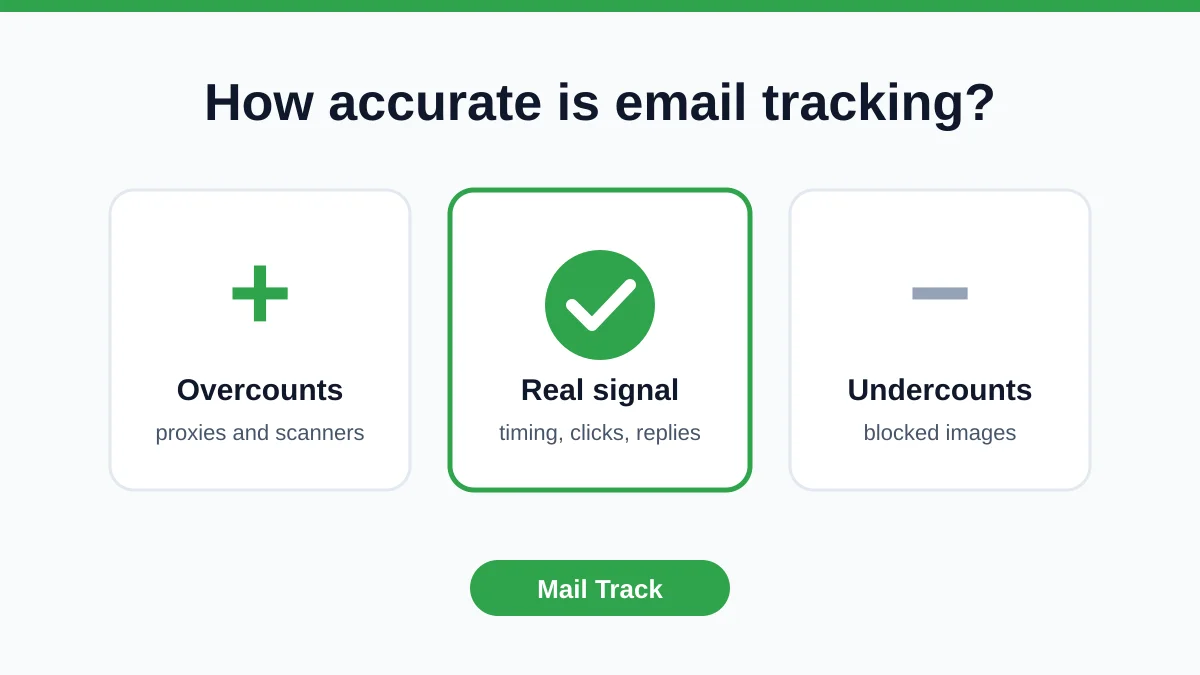
How Accurate Is Email Tracking? What Opens Really Tell You
How accurate is email tracking in Gmail? Learn why opens get overcounted or missed, how to spot false opens, and which signals to trust before you follow up.
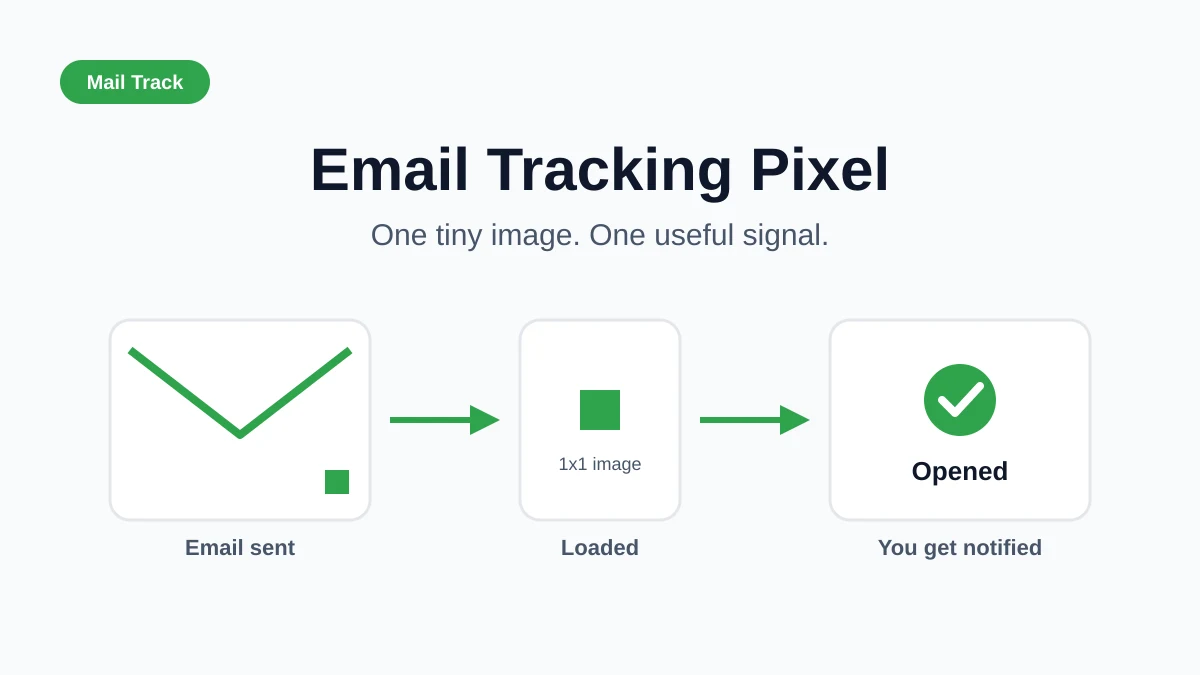
Email Tracking Pixel: How It Works, How to Spot One and Where It Falls Short
What is an email tracking pixel, how does it show an open in Gmail, how can you find one, and why Gmail and Apple Mail proxies limit what it can tell you.

7 Example Email Accept Job Offer Templates
Use these 7 example email accept job offer templates for formal, concise, and enthusiastic replies, with subject lines, clauses, and sending tips.