
10 Best Sales Outreach Tools to Use in 2026
Discover the 10 best sales outreach tools for 2026. Compare top platforms for prospecting, email tracking, and automation to build your ideal sales stack.

Stop juggling tabs and start closing deals. If your screen right now looks like Gmail, LinkedIn, CRM, a dialer, and a spreadsheet all fighting for attention, you’re already feeling the hidden cost of sales outreach tools that don’t work together. The right stack doesn’t just send more messages, it helps you see replies, time follow-ups, and keep momentum when persistence matters, which matters a lot when 80% of sales require five or more follow-ups while 44% of reps give up after one attempt (RAIN Group outreach benchmark). For a broader perspective on franchise-driven prospecting workflows, see franchise lead generation.
Email still does most of the heavy lifting in sales, but only if you can track what happens after send. Buyers often prefer email as their primary sales channel, yet reply rates stay low enough that open signals, reply signals, and sequence timing become operational necessities rather than nice-to-haves (Salesforce-cited sales research via Forbes Advisor). That’s why the best tools in 2026 aren’t just message senders, they’re systems for sequencing, visibility, and follow-up discipline.
1. Mail Tracker for Gmail
A Gmail-first rep does not need another dashboard to know whether a prospect opened the last message. Mail Tracker for Gmail stays in the inbox you already use, so tracking feels like part of email rather than a separate system you have to manage. It adds double check marks, open counts, timestamps, and instant push notifications to Gmail on web and mobile, which makes it easier to time follow-ups from your desk or while you’re away from it. If you want a closer look at the workflow, the product also has a guide on email tracking for Gmail, and the setup is aimed at reps who want visibility without adding platform sprawl.
The trade-off is restraint, and that is why it works for a lot of Gmail users. It records open events only, not message content, and the company documents GDPR compliance plus user data rights for access, correction, and removal. That matters if you email recruiters, clients, or prospects who care about trust, because you get read receipts without moving into heavier surveillance-style tooling.
The pricing model is straightforward. The free plan includes unlimited tracked emails, real-time read receipts, and push alerts, while Premium removes the visible signature and adds full tracking history, daily summary reports, and priority support. There is also a lifetime license for $99.99 and Premium at roughly $2.99/month billed yearly (Mail Tracker for Gmail pricing). Social proof is strong too, with a 4.6/5 rating from 2,677+ reviews on the Google Workspace Marketplace.
Practical rule: use open tracking to decide when to follow up, not to over-interpret intent. In privacy-restricted inboxes, it works best as one signal among several.
For Gmail-first teams, especially sales reps, recruiters, freelancers, SMB owners, and customer success managers, the value is easy to measure. You stop guessing whether a thread is dead and start acting when it becomes active.
Pros and cons
- Native Gmail workflow: read receipts, open counts, timestamps, and push alerts show up where you already work.
- Strong mobile continuity: Gmail on Android and iOS is supported, so follow-up timing does not depend on being at your desk.
- Privacy-aware design: it tracks open events, not content, and publishes data-rights documentation.
- Visible free-plan signature: the free version adds a tracking signature, which Premium removes.
2. Yesware
Yesware is a solid fit when your team wants outreach inside Gmail or Outlook without adopting a bigger platform. It gives you email and attachment tracking, templates, scheduling, and basic campaigns, so reps can keep most of their motion in the inbox instead of bouncing between apps. For Gmail-first sellers, that lower learning curve is the main reason it still earns a spot on the shortlist.
The trade-off is depth. Yesware is good at inbox-native execution, but it isn’t built to replace a full multichannel stack, and it doesn’t come with a built-in dialer. That makes it best for teams that care more about fast adoption than advanced orchestration. If your motion is mostly email with light sequencing, that simplicity is a feature, not a limitation.
Its pricing is straightforward relative to many enterprise tools, and the product offers a 14-day free trial (Yesware plans and pricing). That makes it easy to test with a few reps before committing. The Enterprise tier adds Salesforce integration, so if your workflow is CRM-heavy, that’s the level that matters.
If your team keeps saying, “We just need tracking and templates inside Gmail,” Yesware is often enough.
Who it’s for: Gmail or Outlook teams that want tracking, templates, and basic sequencing, but don’t need a full multichannel engagement platform.
3. Apollo.io
Apollo.io makes sense when data and outreach need to live together. It combines a large B2B contact database with sequencing, a dialer, an AI assistant, and CRM integrations, which is why it’s popular with SMB and mid-market teams that want to avoid stitching together separate prospecting and engagement tools. The key value is consolidation, you can find contacts, enrich them, and launch outreach from one place.
The main advantage is obvious once teams hit scale. Instead of paying for a database, then a sequencing tool, then a separate workflow layer, Apollo gives you a single stack for prospecting and outreach. That also makes it useful for teams that need a Chrome extension surfacing contact details in LinkedIn, Gmail, Salesforce, and HubSpot. Apollo’s public pricing page is at Apollo.io pricing.
The trade-off is operational discipline. Tools with large databases can tempt teams into broad targeting, which usually lowers reply quality. Apollo works best when your ICP is clear and your team is willing to verify data before pushing volume. It’s also a better fit for teams with some tolerance for configuration, because the power of the platform can feel heavy if all you want is a lightweight inbox helper.
For teams that also want a practical Gmail workflow around business development, I’d pair the platform with a simple process for tracking responses and timing follow-ups. That’s where a Gmail-native tracker can still play a supporting role, even in a broader stack. See business development tools for how that logic fits into a larger outbound motion.
Who it’s for: teams that need database plus outreach in one SKU, especially if they’re scaling beyond manual prospecting.
What to watch
- Credit management matters: database and export usage can be metered.
- LinkedIn use needs guardrails: browser-based automation should be handled carefully.
- Best results come from a tight ICP: the bigger the database, the easier it is to drift.
4. Lemlist
Lemlist is the pick for teams that want multichannel outreach with a creative edge. It supports email, LinkedIn, SMS, calls, and WhatsApp, and it also includes a 650M+ lead database, verification, deliverability tools, and warm-up features. That mix makes it attractive for teams that don’t want separate tools for every touchpoint and prefer to run more thoughtful campaigns from a single system.
What makes Lemlist different is that it’s not just about channel coverage. It’s built for teams that care about message presentation, deliverability, and pacing. If your Gmail inbox is the center of your workflow, the Chrome extension keeps the experience usable without turning every task into a platform hop. Pricing details and add-ons are public at Lemlist pricing.
The downside is process maturity. Once you start layering credits, verification, and multi-step automation into the same workflow, the team needs to know what it’s doing. That’s a good problem for experienced outbound teams, but it can be too much for small groups still learning sequence discipline. The strongest users are the ones who already understand when to lean on LinkedIn, when to email, and when to stop.
Lemlist also fits teams that want to put more thought into deliverability instead of assuming volume will carry the day. In practice, that matters because cold outreach remains low-yield in aggregate, and the campaign setup has to earn each reply. The more disciplined your targeting and timing, the more useful Lemlist becomes.
Who it’s for: SMB and growth teams that want multichannel outreach with strong deliverability controls and a more creative execution style.
5. Outreach
Outreach is the enterprise play. It spans sequences, buyer-sentiment analysis, analytics, dialer support, meetings, and forecasting, which is exactly why larger SDR and AE teams buy it when they need standardization. It’s not light, and it’s not trying to be. It’s built to enforce process across a big revenue organization.
The best case for Outreach is governance. If you have managers who need consistent views into rep activity, coaching, and sequence performance, the platform gives them far more structure than a basic outreach tool. The Gmail and Outlook inbox integrations help keep reps in their daily flow, but the primary value is the management layer around the workflow. The product is available at Outreach.
The downside is obvious too. Pricing is quote-based, license plus consumption can add complexity, and the platform can be more than smaller teams need. I’d rarely recommend it for a scrappy team that just wants to send better follow-ups from Gmail. I would recommend it when process consistency, forecasting, and manager visibility matter more than speed of initial setup.
Enterprise tools fail when small teams buy them for a demo and never fully implement them. If you don’t need the management layer, you’re paying for shelfware.
Who it’s for: larger SDR and AE teams that need sales execution plus forecasting and governance under one roof.
6. Salesloft
Salesloft competes in the same enterprise territory, but it leans harder into cadence execution, AI prioritization, dialer support, analytics, and RevOps alignment. That makes it a strong choice when the organization cares about coaching reps and standardizing plays across a broader revenue motion. The product has a large installed base and a well-developed integration marketplace, which helps when the rest of your stack is already complicated.
The practical difference from lighter tools is that Salesloft is opinionated about process. That can be good for managers who want the team following the same plays, but it can feel heavy if you’re under-resourced or still figuring out your sequence strategy. Pricing isn’t public, which usually means you’re already in the territory where sales operations and procurement are part of the buying process. Visit Salesloft pricing for the vendor’s current positioning.
The tool works best when teams already have a mature CRM and a clear idea of how they want reps to work. It’s less attractive for teams that just need better visibility into Gmail opens and follow-ups. In those cases, a lighter tool usually wins on adoption.
Who it’s for: upper-SMB to enterprise teams that need cadence control, coaching depth, and RevOps alignment.
7. HubSpot Sales Hub
HubSpot Sales Hub is the best choice when you want outreach tied tightly to a native CRM. It includes sequences, templates, playbooks, sales analytics, calling, quotes, CPQ, and AI agents inside HubSpot’s Smart CRM, so the seller doesn’t feel like they’re operating in a separate outreach universe. For teams already committed to HubSpot, that integration advantage is hard to ignore.
The primary benefit here is tool consolidation. Instead of moving data between a CRM and a separate engagement platform, you keep prospecting, logging, and reporting in one ecosystem. That reduces friction for reps and gives managers a more complete picture of what’s happening. HubSpot also keeps pricing public, including a free option, which makes evaluation easier. See HubSpot Sales Hub pricing.
The trade-off is cost variability as you move up the stack. Onboarding fees at higher tiers and credit-based AI usage can make the total spend less predictable than the sticker price suggests. That means it’s best for teams that want the CRM to be the center of gravity, not just another place to sync data.
Who it’s for: teams that want CRM-native outreach with public pricing and less tool sprawl.
Best fit signals
- Already on HubSpot: adoption is easier because the workflow stays native.
- Need reporting in one system: outreach, CRM, and analytics stay closer together.
- Want fewer point tools: it reduces the need to stitch together separate apps.
8. Instantly
Instantly is built for high-volume cold email, especially when teams manage multiple Gmail accounts and domains. It offers unlimited email accounts, account and domain warm-up, advanced scheduling, sequences, and optional lead database and AI add-ons, which makes it practical for agencies and operators who care about deliverability hygiene. If your motion is email-first and high-volume, it’s one of the more efficient ways to run it.
The main strength is infrastructure. Instantly is less about fancy orchestration and more about helping you send at scale without wrecking deliverability. That’s useful when you’re running several domains or trying to keep reputation clean across multiple inboxes. Pricing is public at Instantly pricing.
The downside is focus. It’s an email-first platform, so if you need first-class LinkedIn or phone workflows, this isn’t the answer. It can also become credit-heavy if you lean too hard on enrichment or AI add-ons. I’d use it when the team knows cold email is the channel and doesn’t need a broader engagement suite.
Who it’s for: agencies and teams that run multiple Gmail accounts, high-volume email, and deliverability-sensitive sending.
9. Mailshake
Mailshake is the straightforward pick for SMB teams that want a cold-email tool without a lot of ceremony. It supports email automation, A/B testing, templates, scheduling, deliverability controls, native CRM integrations, and Gmail/GSuite connectivity, so teams can move quickly without hiring an admin just to manage outreach. It’s the kind of tool you can put in front of a small team and expect them to use.
That simplicity is its advantage. The interface is easy to learn, and it works well when the team wants to move from a spreadsheet into a structured sequence system. For Gmail-based teams, that matters because adoption usually beats feature depth in the early stages. Pricing is at Mailshake pricing, and the Sales Engagement tier adds a dialer with unlimited North America minutes and multiple numbers.
The limits show up as soon as the team gets more ambitious. The starter plan caps at one mailbox, higher scale requires more expensive tiers, and there’s no free trial. That makes Mailshake a pragmatic tool, not a playground. It’s especially useful when the team is small enough that overbuilding the stack would just slow everyone down.
For teams that want a practical guide to higher-volume Gmail sending, there’s also a useful companion resource on how to send mass emails, which pairs well with the kind of workflow Mailshake supports.
Who it’s for: small teams that want simple, learnable outreach with enough structure to stop running everything by hand.
10. Reply.io
Reply.io is the multichannel option for teams that want flexibility in how they contact prospects. It supports email, LinkedIn, SMS, calls, WhatsApp semi-automation, and AI SDR functionality through Jason AI, which makes it appealing when you want more than an email tool but don’t need the full weight of enterprise engagement software. It also offers different pricing structures depending on whether you care more about email volume or multichannel workflows. The platform is available at Reply.io pricing.
The strongest use case is teams that really do need multiple channels, not just a checkbox list of them. Reply.io works best when the team is disciplined enough to use the right channel for the right buyer and not spray messages everywhere. The trial period is useful for checking whether the automation fits your motion before you commit.
The caution is complexity. The plan matrix can be confusing, AI and agency tiers can require a quote, and LinkedIn automation still needs careful compliance review. That’s not unusual for multichannel platforms, but it does mean the tool rewards mature teams more than beginners.
Who it’s for: teams that need email, LinkedIn, SMS, and calls in one platform, and can handle a more complex plan structure.
Top 10 Sales Outreach Tools Comparison
| Product | ✨ Key features | ★ UX / Quality | 💰 Pricing & value | 👥 Target audience |
|---|---|---|---|---|
| Mail Tracker for Gmail 🏆 | ✨ Gmail‑native read receipts, double‑check marks, real‑time push, mobile support | ★★★★☆ 4.6/5 (2.6k+ reviews) | 💰 Free; Premium ≈ $2.99/mo; Lifetime $99.99 | 👥 Sales reps, freelancers, SMBs, recruiters |
| Yesware | ✨ Real‑time email & attachment tracking, templates, scheduler, basic campaigns | ★★★★ Good for Gmail‑first teams | 💰 14‑day trial; paid tiers (competitive entry price) | 👥 Small sales teams, individual reps |
| Apollo.io | ✨ 250M+ contacts, multi‑channel sequences, dialer, CRM integrations | ★★★★ Value: data + outreach in one SKU | 💰 Free‑forever starter; paid plans & credits | 👥 SMB → mid‑market sales teams |
| lemlist | ✨ Multichannel (email/LinkedIn/SMS), deliverability warm‑up, lead finder | ★★★★ Strong for precise, scaled outreach | 💰 Tiered plans + credits for data/add‑ons | 👥 Teams scaling multichannel outbound |
| Outreach | ✨ AI sequences, sentiment analysis, dialer, forecasting | ★★★★★ Enterprise‑grade analytics & governance | 💰 Quote-based (license + consumption) | 👥 Large SDR/AE teams, enterprise |
| Salesloft | ✨ Cadence automation, AI prioritization, built‑in dialer, integrations | ★★★★★ Deep coaching & analytics | 💰 Contact sales (enterprise pricing) | 👥 Upper‑SMB to enterprise sales orgs |
| HubSpot Sales Hub | ✨ CRM‑native sequences, templates, calling, AI prospecting agent | ★★★★ Tight CRM + outreach integration | 💰 Free tier; paid tiers; AI credits may apply | 👥 Teams wanting native CRM + outreach |
| Instantly | ✨ High‑volume cold email, account/domain warm‑up, AI & credits | ★★★★ Practical for multi‑domain sending | 💰 Clear starter/scale tiers; credits for enrichment | 👥 Agencies, high‑volume Gmail teams |
| Mailshake | ✨ Email automation, A/B testing, dialer, deliverability tools | ★★★★ Simple, fast setup for SMBs | 💰 Tiered plans; add‑ons; no free trial (per FAQ) | 👥 SMBs & agencies running Gmail outreach |
| Reply.io | ✨ Multichannel outreach, AI “Jason”, flexible plans & add‑ons | ★★★★ Flexible but pricing matrix is complex | 💰 14‑day trial; per‑user or volume plans; add‑ons | 👥 Teams needing multichannel automation |
Build Your Ultimate Sales Stack
The perfect sales outreach tool doesn’t exist, but the right stack for your team absolutely does. The best choice depends on your workflow, your buyer behavior, and how much complexity your team can absorb. A rep living in Gmail has different needs than a 30-person SDR pod, and a founder running a list by hand has different needs than a RevOps leader standardizing an enterprise cadence.
Start with the channel that matters most. If Gmail is where your team already works, a native tracker like Mail Tracker for Gmail gives you immediate visibility without a workflow reset. If your motion depends on both data and sequencing, Apollo.io can be the foundation. If your team is mature enough to need multichannel cadence, then tools like Lemlist, Reply.io, Salesloft, or Outreach deserve a serious look.
The big mistake is buying for the demo instead of the daily workflow. A tool only earns its seat if reps use it, managers trust it, and follow-up gets better. That’s why the best stacks are usually smaller than people expect, but more intentional.
Use the list above to narrow the field, then run a real trial with actual prospects, not a sandbox. Pay attention to where reps hesitate, where follow-up timing improves, and where the tool disappears into the background instead of becoming another tab to manage. That’s the difference between software that looks good and software that helps you close.
If you want a lightweight way to know when Gmail prospects open your emails, Mail Tracker for Gmail gives you read receipts, timestamps, and instant notifications right inside the inbox. It’s a practical fit for sales teams that want better follow-up timing without adding another dashboard to manage. Visit Mail Tracker for Gmail and see how much easier Gmail outreach feels when the signals are visible.
Ready to track your emails?
Add Mail Track for Gmail from the Google Workspace Marketplace and know the moment your emails are opened. Free and unlimited.
Add to GmailMore reading
More from Guides
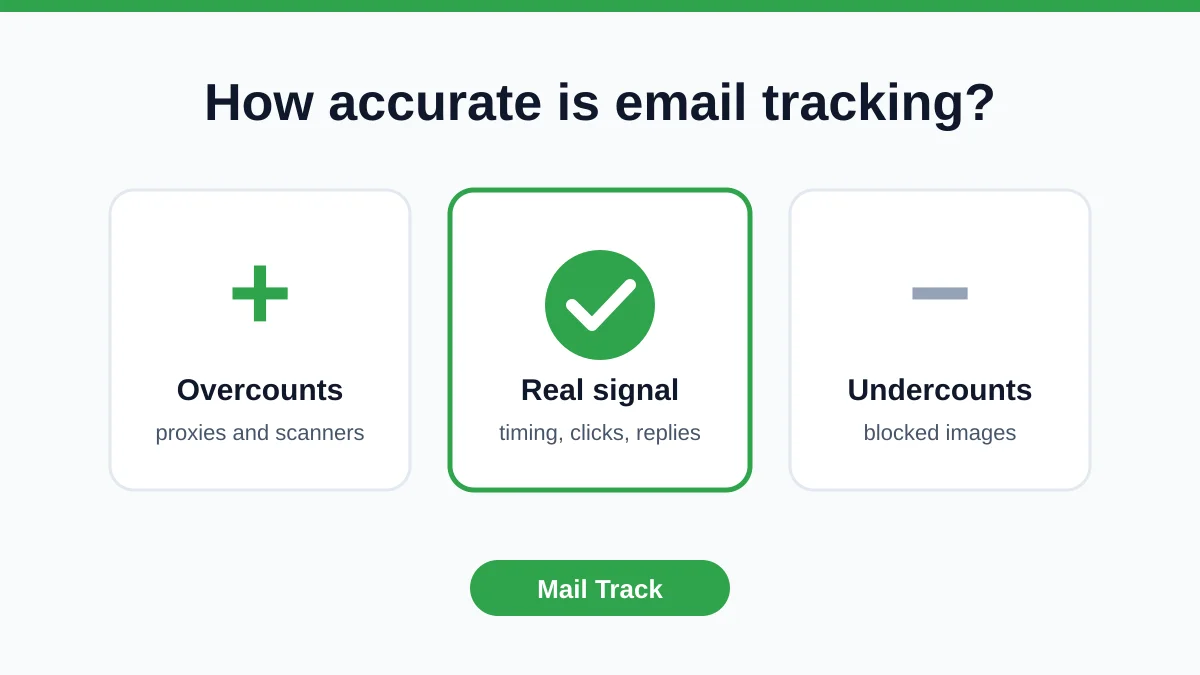
How Accurate Is Email Tracking? What Opens Really Tell You
How accurate is email tracking in Gmail? Learn why opens get overcounted or missed, how to spot false opens, and which signals to trust before you follow up.
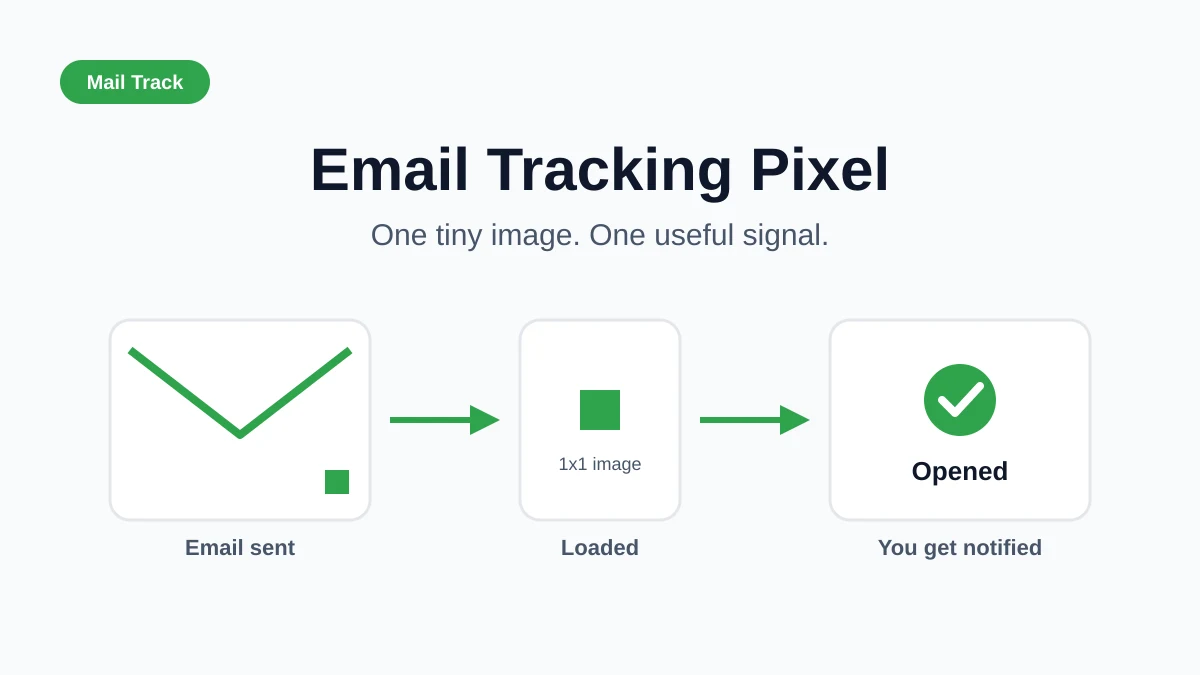
Email Tracking Pixel: How It Works, How to Spot One and Where It Falls Short
What is an email tracking pixel, how does it show an open in Gmail, how can you find one, and why Gmail and Apple Mail proxies limit what it can tell you.

7 Example Email Accept Job Offer Templates
Use these 7 example email accept job offer templates for formal, concise, and enthusiastic replies, with subject lines, clauses, and sending tips.